Conference Info
Complex materials are increasingly central to modern engineering systems, yet their internal condition is often difficult to assess because of multiscale heterogeneity, anisotropy, scattering, nonlinear degradation, and restricted physical access. Concrete infrastructure, textured polycrystalline alloys, composite structures, and electric-vehicle battery cells all present this challenge in different forms: their performance is governed not only by visible defects, but also by hidden microcracks, grain morphology, texture, interfacial quality, internal temperature fields, and evolving electrochemical–mechanical states. This creates a strong need for diagnostic methods that can see beyond surfaces and convert subtle wave–material interactions into actionable information.
This talk will discuss recent advances in ultrasonic inspection and characterization of complex engineering materials. The focus is on extracting material-state information from ultrasonic velocity, attenuation, scattering, frequency content, guided-wave behaviour, and wavefield evolution. Examples include early degradation detection in reinforced concrete, microstructure and anisotropy characterization in polycrystalline and additively manufactured metals, defect and bond-quality assessment in composite structures, and non-invasive evaluation of EV battery state of charge, state of health, and internal temperature.
Across these applications, the central theme is the shift from ultrasound as a defect-detection tool to ultrasound as a quantitative material-state assessment method. By combining wave physics, modelling, signal processing, and data-driven inference, ultrasonic techniques can provide deeper insight into complex materials and support safer infrastructure, more reliable manufacturing, stronger composite systems, and smarter battery diagnostics.
Biography
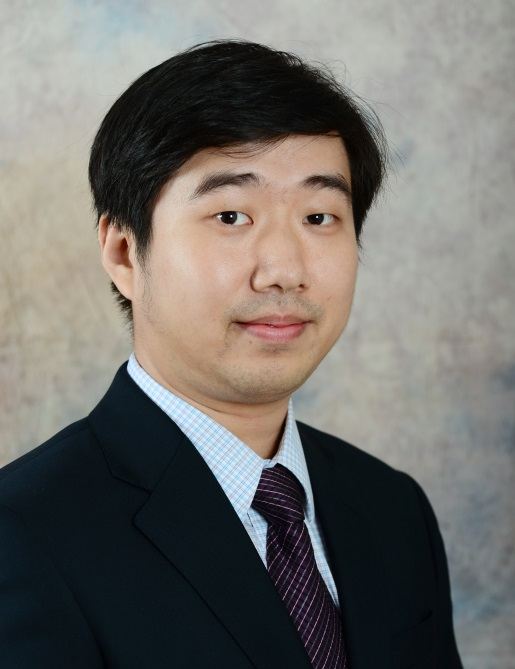
Dr. Zheng Fan is an Associate Professor in the School of Mechanical and Aerospace Engineering at Nanyang Technological University, Singapore. He received his Ph.D. in Mechanical Engineering from Imperial College London in 2010, and his B.Sc. and M.Sc. degrees in Acoustics from Nanjing University in 2004 and 2006, respectively. Dr. Fan leads a research group focused on developing advanced techniques for non-destructive evaluation, structural health monitoring, ultrasonic material characterization, and acoustic wave manipulation. His work combines fundamental wave physics, computational modelling, advanced signal processing, and experimental validation to create technologies that can be translated rapidly into practical engineering applications. He has established strong collaborations with leading international companies and organizations, including Rolls-Royce, Shell, Lloyd’s Register, EDF, and Sembcorp. His research spans both fundamental scientific investigations and industry-driven solutions for real-world challenges in infrastructure, advanced manufacturing, energy systems, and complex materials. He has published more than 100 papers in leading journals, holds several international patents, and has successfully licensed technologies to industry partners. In recognition of his contributions to structural health monitoring, Dr. Fan received the Achenbach Medal in 2018. Since 2020, he has been listed among the world’s top 2% of scientists by Stanford University. He also serves as an Associate Editor for Structural Health Monitoring: An International Journal and Ultrasonics, two leading journals in his field.