Conference Info

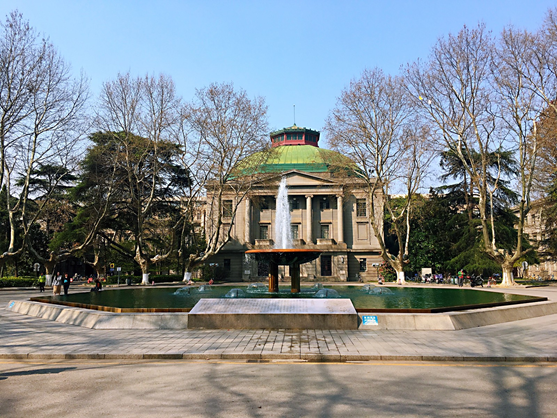
Southeast University (SEU), located in Nanjing, the ancient capital of the Six Dynasties, is a prestigious university with an outstanding reputation both at home and abroad. A national key university directly under the Ministry of Education of China and co-sponsored by Jiangsu Province, SEU is also designated as a key university under China's "Project 985" and "Project 211." In 2017, it was selected as a Class A university under the national World-Class University Construction program.
1. History
Southeast University is an institution with a long history and a profound scholarly heritage. Founded in 1902 as Sanjiang Normal College, it evolved through a succession of names and forms — Liangjiang Normal College, Nanjing Higher Normal School, National Southeast University and National Central University. In the nationwide restructuring of higher education in 1952, its liberal arts and sciences departments were transferred out, and Nanjing Institute of Technology was established on the original site of National Central University, formed chiefly from the former university's engineering college. In May 1988 the institution resumed the name Southeast University. In April 2000, a new Southeast University was created through the merger of the existing university with Nanjing Railway Medical College and Nanjing College of Communications, with Nanjing Geological School incorporated into it as well. Over more than 120 years, SEU has developed a distinctive ethos of "Rigour, Truthfulness, Unity and Diligence," an educational philosophy of "renown through science, service to the country through talent," and the motto "Strive for Perfection," which continues to define the university.
2. Academic Structure and Levels
Southeast University (SEU) is a comprehensive research university distinguished by the strength of its engineering disciplines. Twelve of its disciplines have been selected for China's national "Double First-Class" construction list, placing it joint eighth among universities nationwide. Eighteen disciplines rank in the ESI global top 1%; Engineering (13th worldwide) and Computer Science (5th worldwide) sit firmly within the top 0.01%, while Materials Science and Chemistry are in the top 0.1%. The university comprises 39 schools and departments offering 85 undergraduate programs. It is authorized to confer degrees in 49 first-level doctoral disciplines and 52 first-level master's disciplines, and offers 13 categories of professional doctoral degrees and 32 of professional master's degrees. SEU's research infrastructure includes 3 national key laboratories under its leadership and 5 in which it is a partner, 1 National Technology Innovation Center that it leads and 2 jointly built with others, as well as 1 National Engineering Research Center, 2 National Engineering Technology Research Centers, 3 National & Local Joint Engineering Research Centers, 1 National Center for Applied Mathematics and 1 National Platform for Industry-Education Integration and Innovation. It also hosts 39 Postdoctoral Research Stations, 4 national-level liberal arts platforms, 2 Jiangsu Provincial Key High-End Think Tanks and 1 Jiangsu Provincial Key Nurturing Think Tank.
3. International Collaboration
Upholding the principle of fostering virtue through education, Southeast University (SEU) has always regarded talent cultivation as its fundamental mission. Over more than a century, it has educated 410,000 outstanding professionals across a wide range of fields for the nation and society, many of whom have gone on to become leaders who made lasting contributions; more than 230 academicians of the Chinese Academy of Sciences and the Chinese Academy of Engineering have studied or worked at SEU. In the new era, the university has built on this heritage and redefined its educational goal: to form leading talents who pair a deep commitment to family and country with a global outlook, and who are ready to shape the future and advance the well-being of humanity. SEU was among the first batch of MOE pilot universities for comprehensive higher-education reform, one of the first National Demonstration Universities for Innovation and Entrepreneurship Education Reform, and one of the first MOE pilot institutions for the comprehensive reform of "Three-All Education" — education involving all staff, across the whole process and in all dimensions. It was also selected as one of the first 12 MOE Future Technology Colleges nationwide and hosts 3 bases under the MOE's Top-Notch Student Training Program for Basic Disciplines (Plan 2.0). Its teaching portfolio is equally distinguished: 53 undergraduate programs designated as national first-class undergraduate major construction sites and 9 at provincial level; 5 programs in the national comprehensive reform pilot and 23 national distinctive-major construction sites; 36 courses in the first batch of National Quality Resource-Sharing Courses and 3 national demonstration courses in curriculum-based values education; 3 cases selected among the MOE's exemplary "AI + Higher Education" application scenarios; and the First Prize in the National Teaching Achievement Awards in five consecutive cycles (the awards are conferred every four years). The university operates 8 National Experimental Teaching Demonstration Centers, 12 national pilot zones for innovation in talent-cultivation models, 12 National Engineering Practice Education Centers and 11 national pilot Virtual Teaching and Research Offices, with 11 teams named National Teaching Innovation Teams. 22 of its textbooks have been selected for the MOE's 14th Five-Year Plan higher-education textbook system for strategic emerging fields.